
Girls in STEM
- Home
- Girls in STEM
Workshops in Chemistry Technology Engineering Mathematics Public Speaking
Girls in STEM Overview
We offer three 10-Week workshops for Girls in STEM grades 1-5. No previous Girls in STEM experience/classes required for any session. Classes are held at The Youth Center, 10761 Los Alamitos Blvd, Los Alamitos, CA
Tuition includes 10 classes, program supplies and materials.
Thank you to the Arnold & Mabel Beckman Foundation for providing scholarships for youth.
(Curriculum 1) Sept. 3- November 5 | Wednesdays 4:30 – 5:30 p.m. | Grades 1-5 (Girls in STEM)
(Curriculum 2) Nov. 19 – February 11 (no class on November 26, December 24, & December 31) | Wednesdays 4:30 – 5:30 p.m. | Grades 1-5 (Girls in STEM)
(Curriculum 3) Mar. 4 – May 13 (no class on April 8) | Wednesdays 3 – 4 p.m. | Grades 1-5 (Girls in STEM)
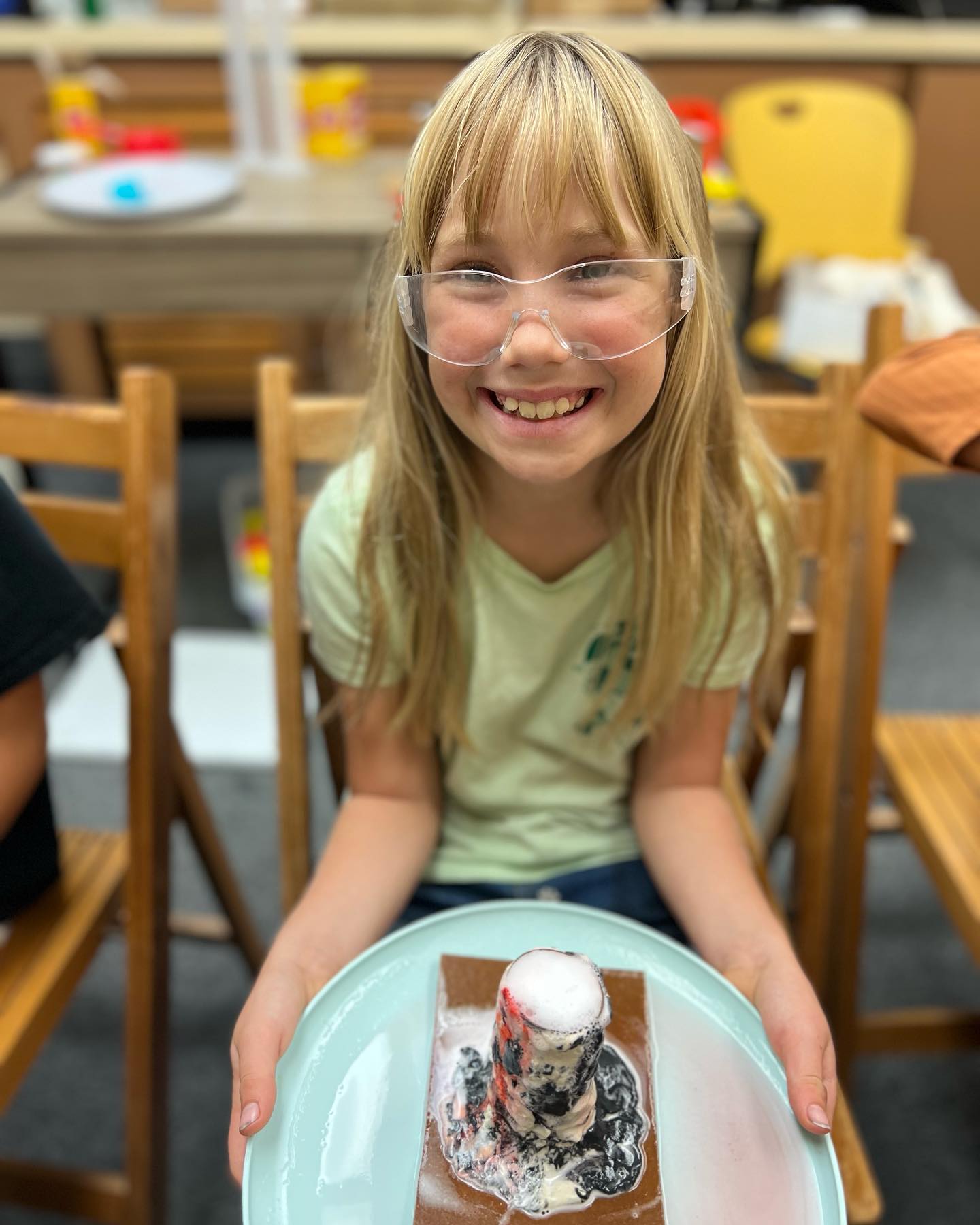
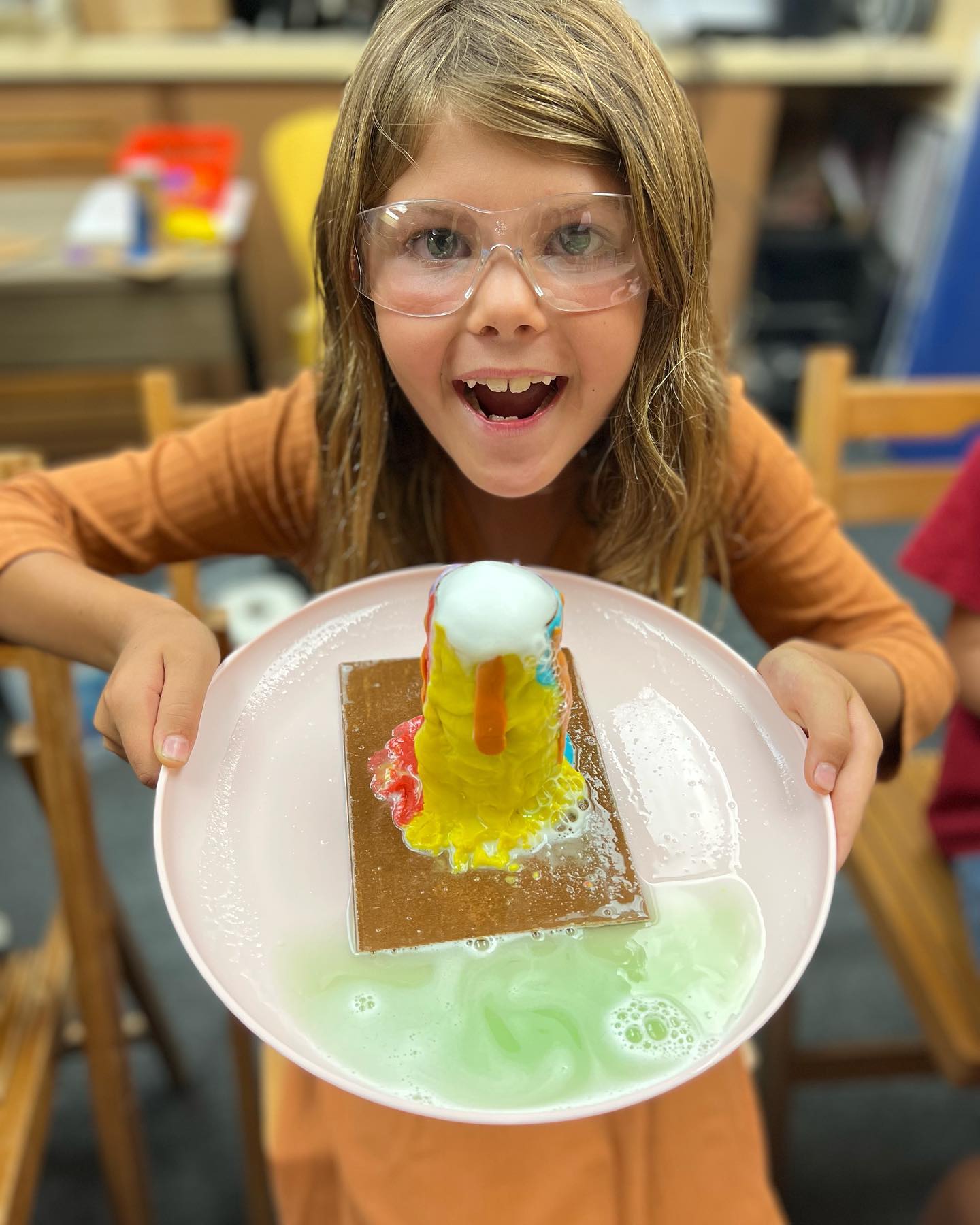

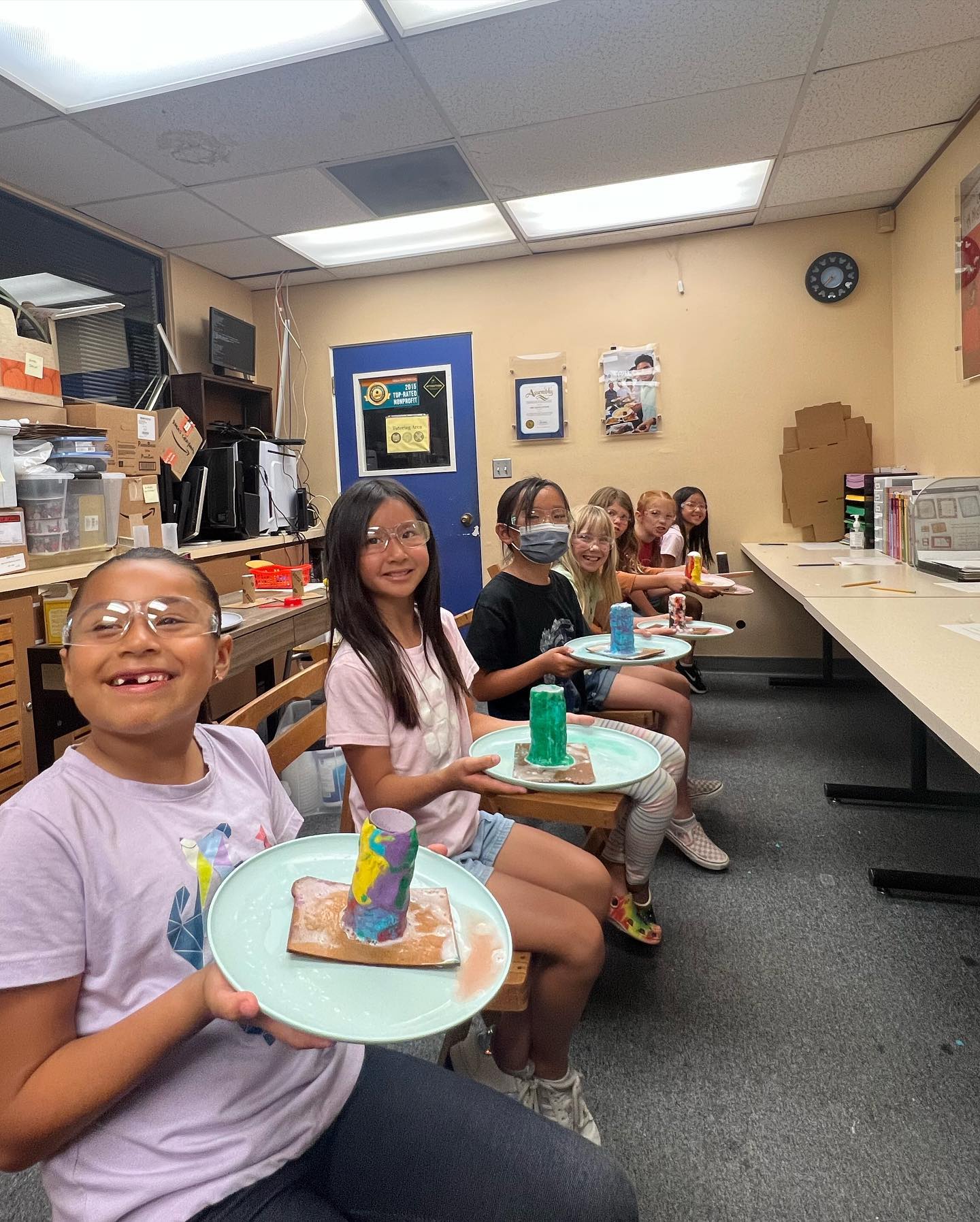

Sample/Curriculum 1
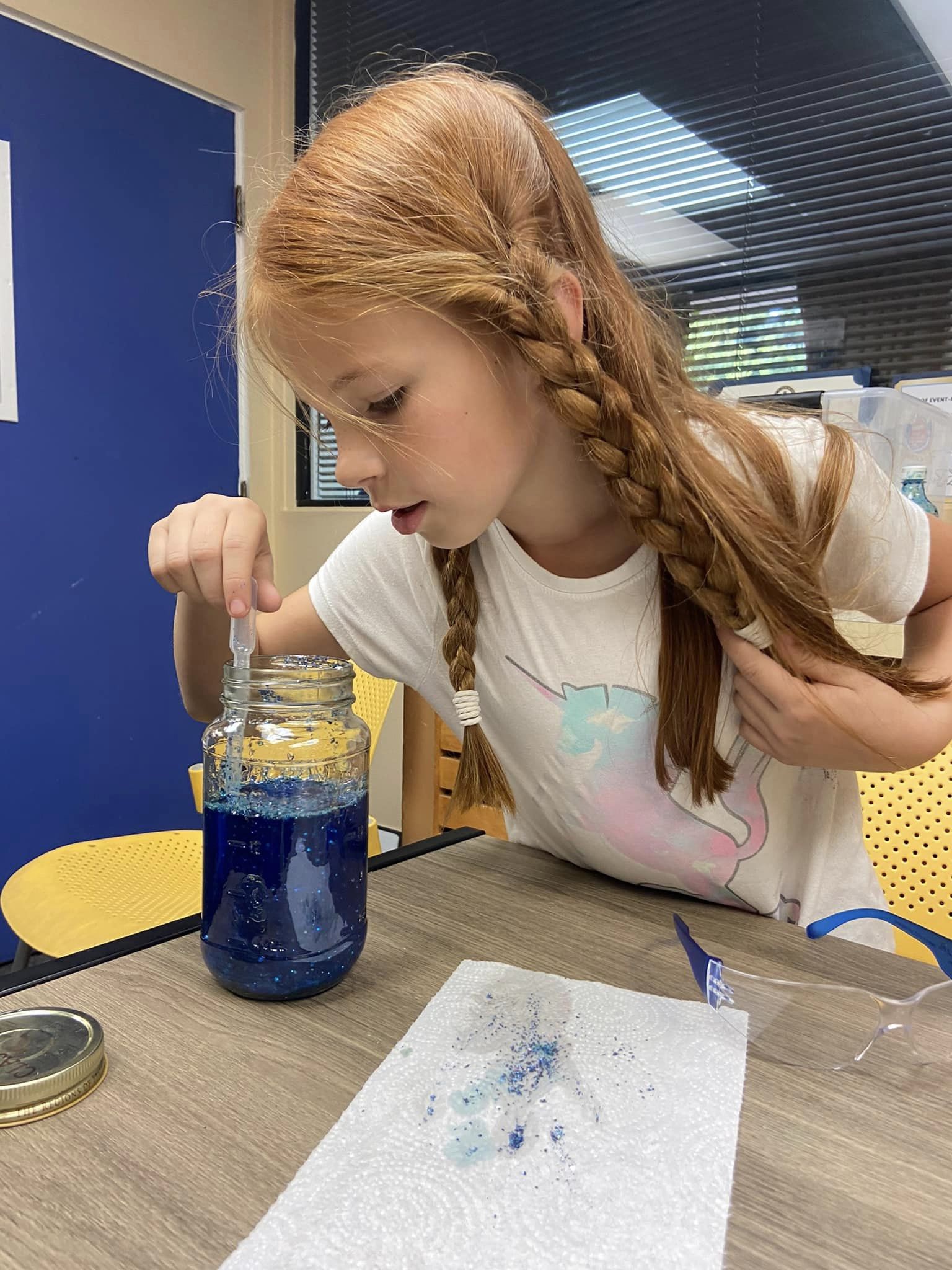
Week 1: DIY Lava Lamp (Polarity & Icebreakers)
Overview: In this hands-on lesson, students explore polarity through a fun lava lamp activity. They’ll observe how oil and water stay separate due to their molecular structure and gain a visual understanding of how polar and nonpolar substances interact. This engaging project also doubles as an icebreaker to kick off the program.
Activities:
- Experiment: Students will create DIY lava lamps using small jars, oil, water, food coloring, and Alka-Seltzer, while learning about polarity through observation and experimentation.
Week 2: Popsicle Stick Bridges (Architecture)
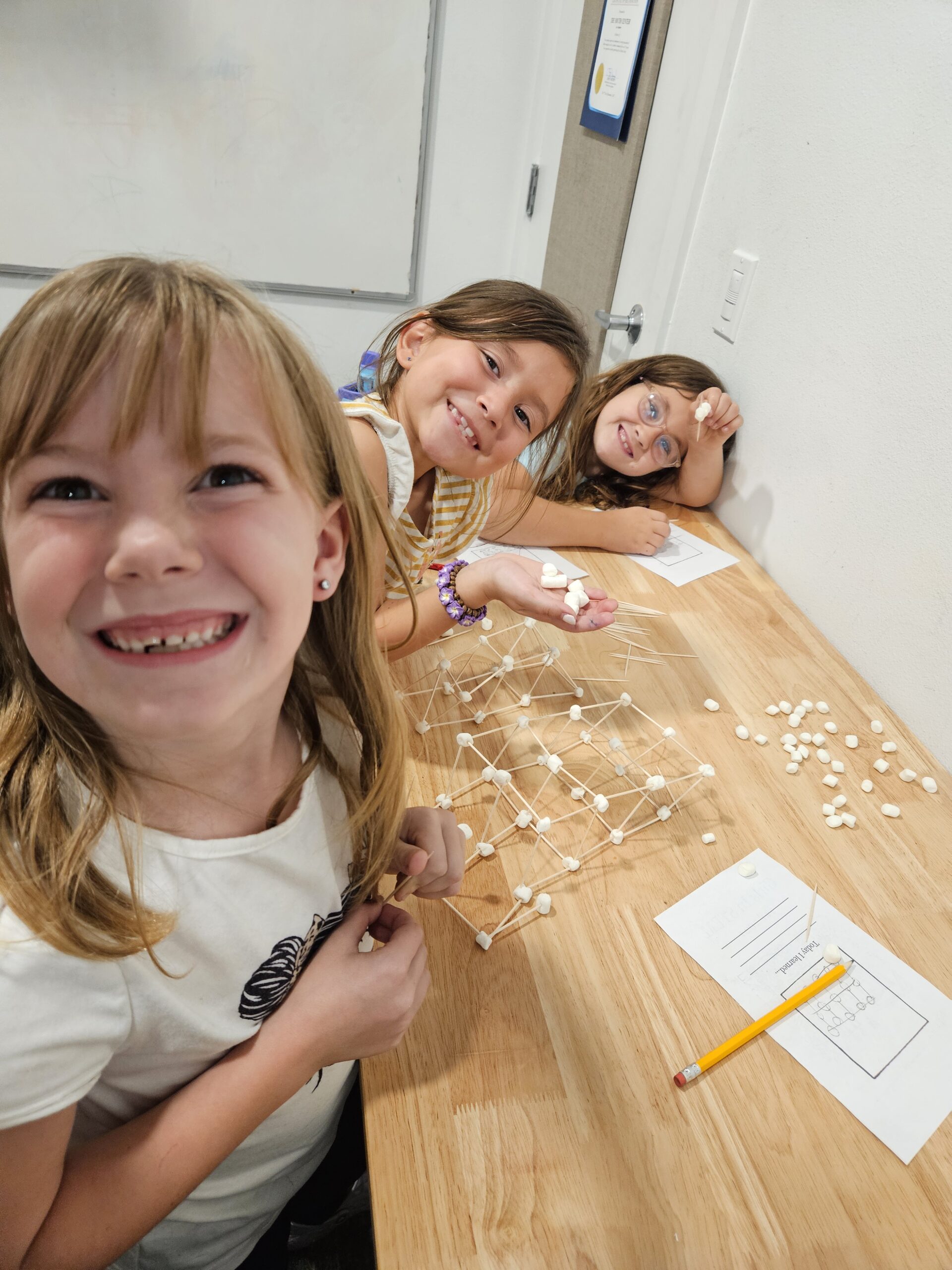
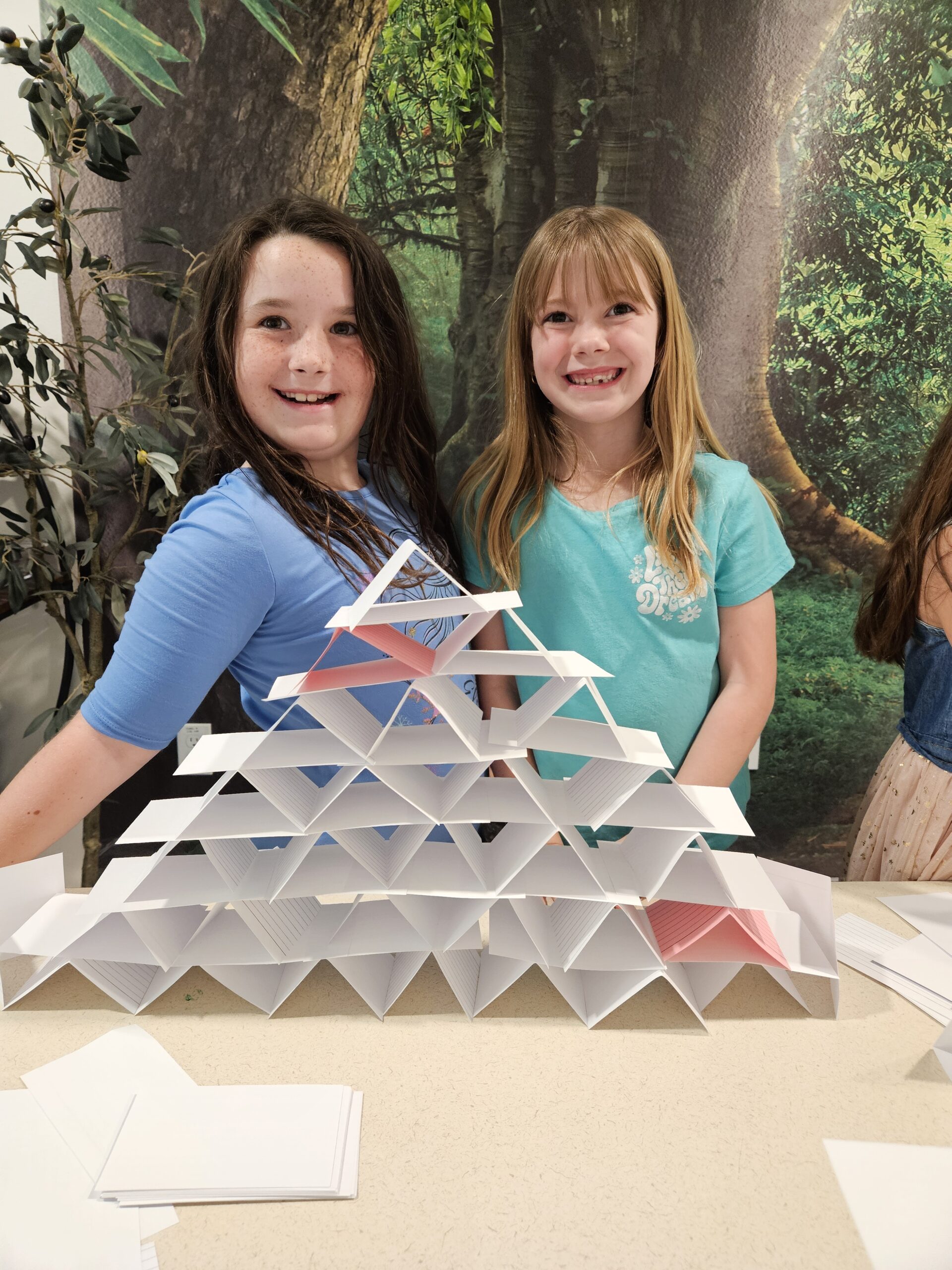
Overview: Students will dive into architecture and engineering by designing and building popsicle stick bridges. This activity highlights structural design, teamwork, and problem-solving as students test their creations for strength and stability.
Activities: Students will plan and sketch bridge designs, build bridges using popsicle sticks and glue, and then test their strength with weights. Small prizes will be awarded for the strongest design.
Week 3: Pudding Soil Layers (Pedology)
Overview: This edible science activity introduces pedology, the study of soil formation and structure. Students will model soil horizons using pudding, cookies, and toppings while learning about soil’s role in ecosystems.
Activities:
- Experiment: Students will build soil layers in clear cups using pudding, Oreos, sprinkles, and gummy worms, and then discuss how soil composition impacts plants and the environment.
Week 4: Scratch Coding (Technology)
Overview: Technology is a powerful tool for problem-solving and creativity. This week, students will be introduced to coding using Scratch, where they’ll learn how to create their own interactive projects.
Activities:
- Sensory Exploration: Students will explore the Scratch platform and create and share their own coding projects.
Week 5: Slime Experiment (Chemical Reactions)
Overview: Chemistry helps us understand the world through the study of matter and its interactions. This workshop turns students into chemists as they explore chemical reactions by creating slime, learning about the science behind it.
Activities:
- Experiment: Students will conduct a hands-on-slime making activity to explore chemical reactions.
Week 6: Static Electricity Butterfly (Physical Science)
Overview: Students will discover the principles of static electricity through a fun butterfly craft. They’ll learn how charges build through friction and how attraction and repulsion work between objects.
Activities: Students will create paper butterflies and use balloons to make them “fly” with static electricity.
Week 7: Mentos & Coca-Cola Experiment (Signs of a Chemical Reaction)
Overview: This exciting experiment demonstrates signs of chemical reactions, including gas production and physical changes. Students will make observations and connect them to real-world science.
Activities:
- Experiment: Students will conduct the Mentos and Coca-Cola reaction and then identify and discuss the signs of a chemical reaction.
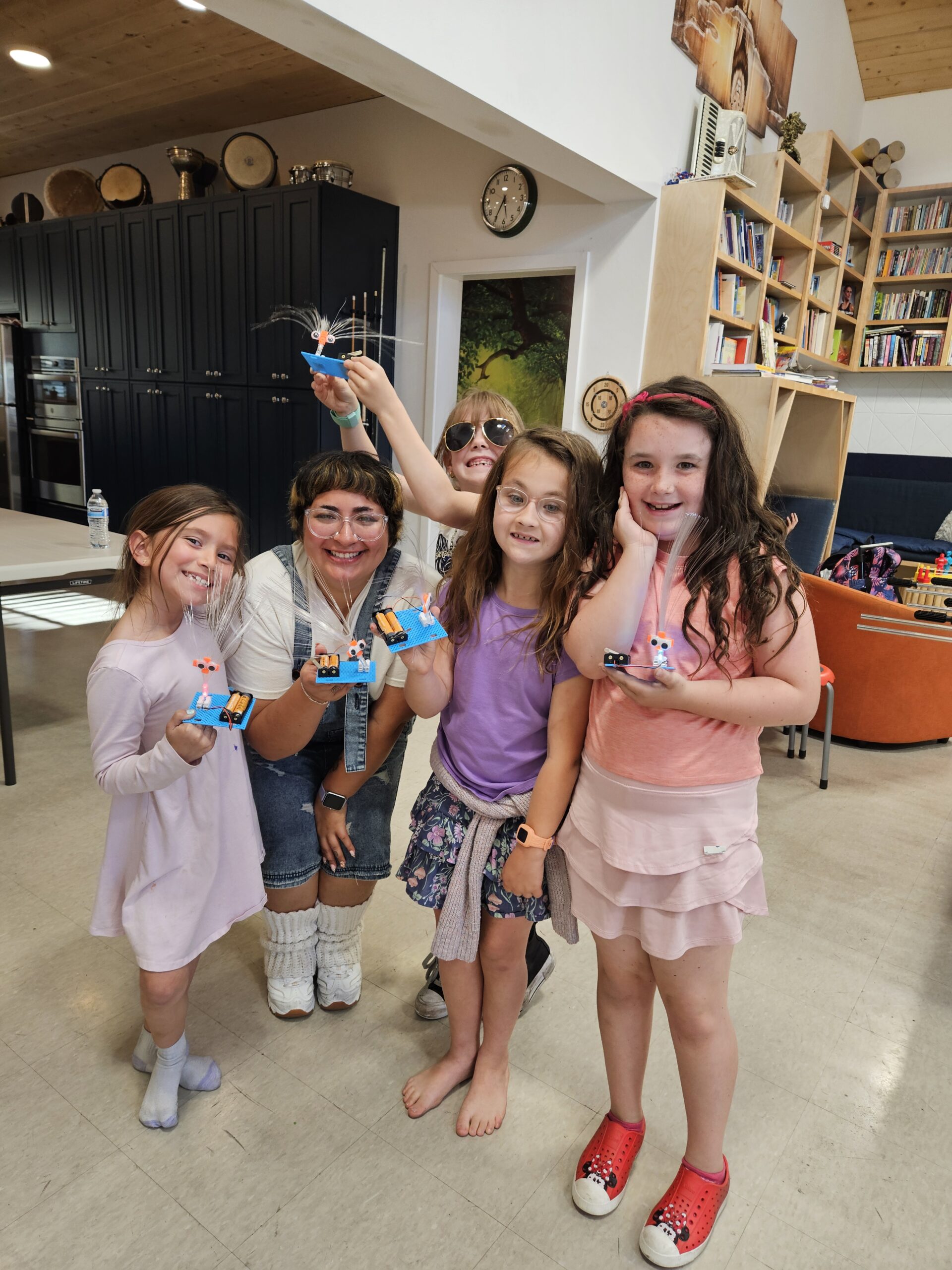
Week 8: Solar-Powered Car Kits (Renewable Energy)
Overview: Students will explore renewable energy sources by building and testing solar-powered cars. They’ll learn how energy from the sun can be harnessed and applied in engineering design.
Activities:
- Building Challenge: Students will build solar-powered car kits and experiment with their performance under different conditions.
Week 9: Presentation Planning
Overview: This week is dedicated to preparing students for their final presentations. They’ll work on organizing their projects, practicing public speaking, and learning how to convey their findings effectively.
Activities:
- Planning Session: Students will develop and rehearse presentations for the final showcase.
Week 10: Presentations
Overview: While a strong STEM background is crucial, effective communication is just as important. In this session, students will present their final projects to peers and parents, honing their public speaking skills and building confidence.
Activities:
- Final Presentations: Students will showcase their projects, practicing public speaking and presentation skills, with a focus on the importance of communication in STEM.
Program was created by Los Alamitos High School student Sarah Saadeh in 2022.

Meet Sarah Saadeh
Sarah Saadeh, now a Civil Engineering major with a Data Science minor at the University of California, Berkeley, originally founded the Girls in STEM program while she was a student at Los Alamitos High School. Driven by her passion to increase female representation in STEM, Sarah recognized early on the gender gap in her advanced math and science classes and took initiative to address it. She designed and developed a hands-on curriculum that empowered young girls to explore science, engineering, and technology through engaging, real-world activities such as chemical experiments, coding, and mechanical design. The program provided participants with the opportunity to build projects and present their work, strengthening both technical knowledge and communication skills. Now at UC Berkeley, Sarah continues to build on that foundation through her academic achievements, including her work as a Regents’ and Chancellor’s Scholar, SEED Scholar, and her involvement in research and leadership within the American Society of Civil Engineers. Her early leadership in creating Girls in STEM reflects her long-standing commitment to mentorship, innovation, and expanding opportunities for young women in STEM.